
Direct answer: A license plate recognition system (ANPR / LPR) reads a vehicle's plate from a camera image, converts it to text, compares it with an authorized, subscriber or blacklist, and automatically controls the barrier, sliding gate or parking fee accordingly. No card, remote or tag is needed; the plate is the ID. License plate recognition systems are grouped by how they operate into software-based, software-free (on-camera), PLC-controlled, wireless and cloud-based systems.
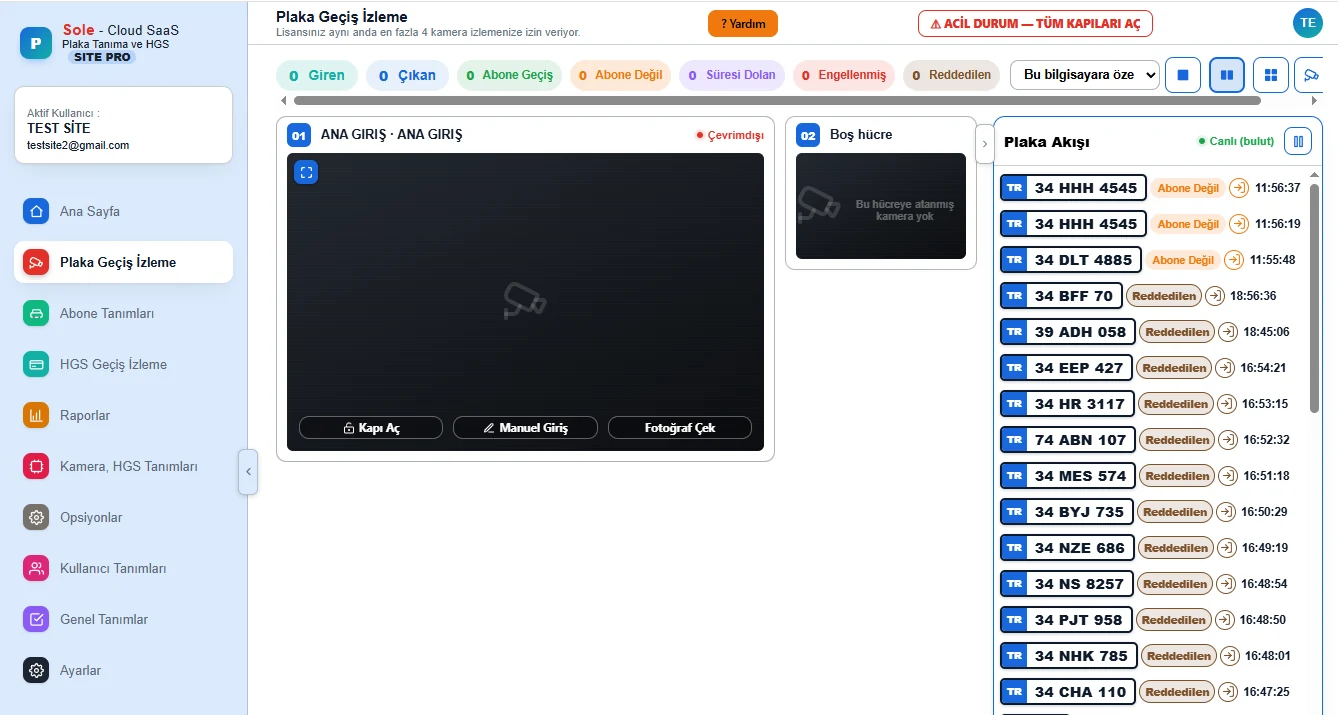
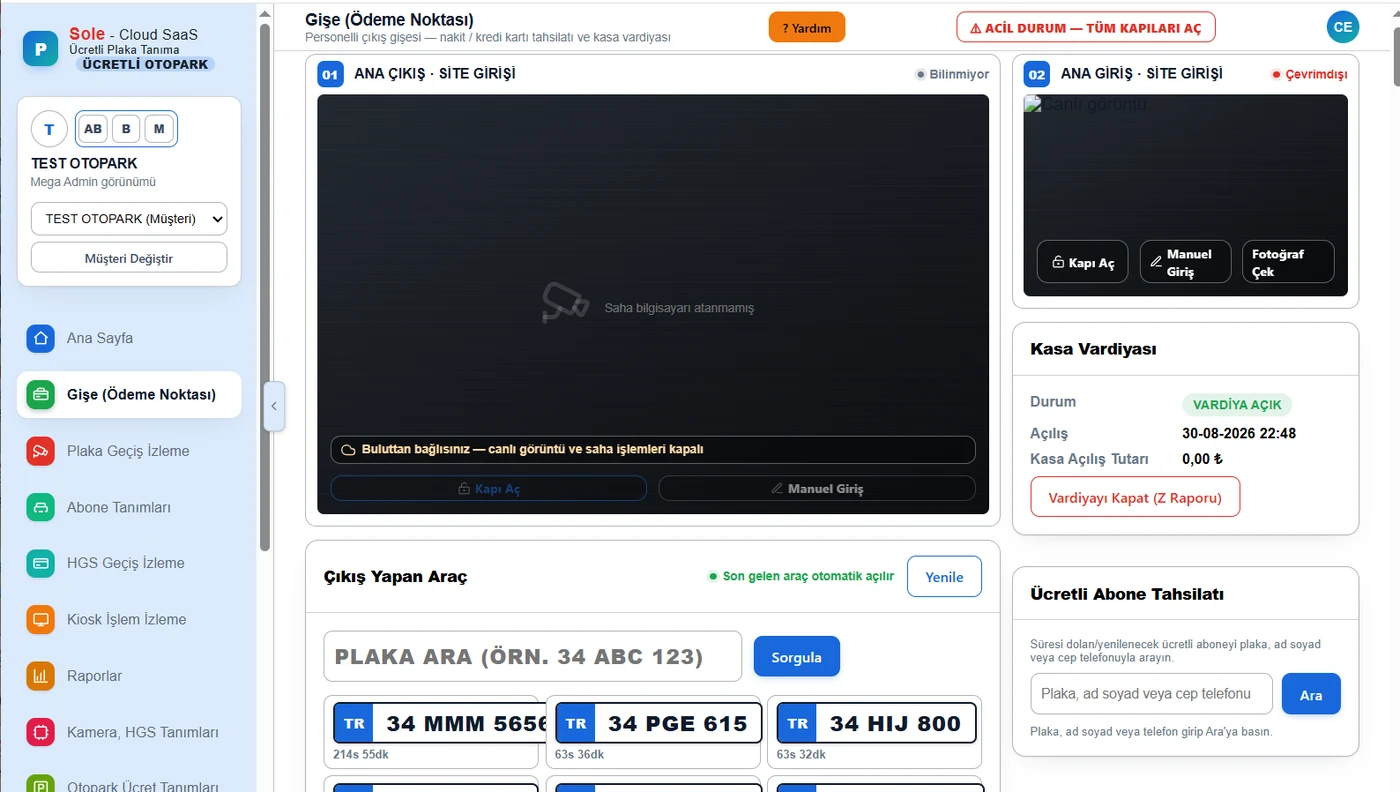
What is a license plate recognition system?
A license plate recognition system is an automatic vehicle access control solution that captures the plate of a vehicle approaching an entry point with a dedicated camera, converts the characters in the image to text with optical character recognition (OCR), and makes a decision by comparing that text with an authorization list. Internationally it is known as ANPR (Automatic Number Plate Recognition) or LPR (License Plate Recognition), and it is also called a “plate reading system” or “vehicle plate recognition”.
Its key difference is that the vehicle or driver does not need to carry an extra credential. In card, remote or RFID tag systems the credential can be lost, copied or handed to another vehicle; with license plate recognition systems the vehicle itself is the credential. That is why it has become the most common access control method in every facility with vehicle traffic, from residential sites to factories, paid car parks and public buildings.
A license plate recognition system is not just “a camera that opens the barrier”. A properly installed system records every passage with date, time, direction and photo, manages subscribers and guests, calculates duration by plate in paid car parks and gives managers reports. Which capabilities you need determines the system type to choose.
An important detail for license plate recognition systems in Türkiye is the plate format. Turkish plates consist of a province code (01–81), a group of one to three letters and a group of digits; the recognition engine validates the text it reads against this structure, reducing confusion between similar characters such as “0” and “O” or “8” and “B”. For border areas, truck parks and hotels where foreign-plated vehicles are frequent, a camera and software able to read plates from other countries should be chosen. The camera we use can also distinguish vehicle type, make and colour, so records identify not just the plate but the vehicle itself, giving an extra check when a fake or cloned plate is suspected.
What types of license plate recognition systems are there?
License plate recognition systems fall into five main types depending on where recognition happens, what makes the decision and how the camera connects to the central unit. In the field these types are often combined; for example, a remote gate of a cloud-managed residential system can be connected over a wireless bridge.
1. Software-based LPR system
The camera reads the plate; the decision and records are handled in the management software. Subscriber/unit definitions, guests, blacklist, photo records and reports live in the software. The standard setup for multi-gate sites, factories and car parks. Plate reading software →
2. Software-free (on-camera) system
Without a PC or server, the camera decides using the whitelist in its own memory and sends a relay signal straight to the barrier. Simple and economical for villas, small sites and single-gate entries. Software-free system →
3. PLC-controlled system
The plate read by the camera is sent as a signal to the PLC in the cabinet; the PLC confirms the vehicle with ground loop sensors and controls the barrier, sliding gate, traffic light and LED display. For factories, industrial zones and security-critical sites. PLC-controlled system →
4. Wireless LPR system
When no cable can be laid between the camera and the central computer, video is carried over a point-to-point radio bridge (typically 2-5 km). Used at truck parks, fuel stations, construction sites and village entrances. Wireless system →
5. Cloud (web / SaaS) LPR system
Access decisions are made on site while records and management live in a browser-based cloud panel. For operators who manage several facilities from one screen and want to monitor from anywhere without installation. Sole Cloud SaaS →
Paid parking system (application type)
The software-based system extended to calculate stay time by plate and collect payment at the booth, kiosk, via QR or a handheld terminal. It can run unmanned. Unmanned paid parking →
License plate recognition system types compared
| Type | Decision made by | Photo records & reports | Typical site |
|---|---|---|---|
| Software-based | Management software | Yes (full) | Residential site, factory, car park, institution |
| Software-free | Camera | Limited (camera memory) | Villa, single-gate site, warehouse |
| PLC-controlled | PLC + ground sensor | Yes, if software is added | Factory, industrial zone, multi-scenario gate |
| Wireless | Central software | Yes | Remote gate, truck park, village entrance |
| Cloud (SaaS) | Site + cloud panel | Yes, accessible anywhere | Multi-site management, residential, car park |
A second split is by architecture: local (software and lists on the on-site computer), cloud (management online) and hybrid (decision on site, management in the cloud). Because Sole systems always decide on site, vehicles keep passing even if the internet goes down; see our offline license plate recognition guide for details.
Components of a license plate recognition system
A working license plate recognition system consists of several hardware and software layers. Each component directly affects read success and system lifetime:
- LPR camera: A high-resolution sensor, varifocal lens and infrared (IR) illumination for a sharp plate image of a moving vehicle. Unlike a CCTV camera, it uses short exposure and image processing optimized for the plate area. Camera selection guide
- Recognition engine: Software that locates the plate in the image and segments the characters. It can run on the camera (edge) or on the on-site computer.
- Authorization list and database: Subscriber, unit, staff, guest and blacklist records. It can also be held on the camera, making it independent of the internet.
- Control layer: Relay board, IO module or PLC that passes the “open” command to the barrier or gate motor.
- Access hardware: boom barrier, bollard or sliding gate, plus loop detector and photocell for safety. Barrier integration
- Network and power: PoE switch, field cabinet and, if needed, a wireless bridge; correct grounding and protection for uninterrupted operation.
- Management software: Live plate feed, photo records, subscriber management, tariffs and reports. Sole Cloud SaaS has 27 ready-made reports in the Site edition and 44 in total in the Paid Parking edition.
- Optional components: LED information display, traffic light, kiosk or Unmanned Exit Payment Terminal, POS device, handheld terminal.
Technical specifications of the LPR camera we use
Our projects use the SOLEsys Dahua PRO license plate recognition camera as standard. According to manufacturer data, its key specifications are:
| Sensor | 1/1.8" CMOS, 4 MP |
|---|---|
| Lens options | 2.7–12 mm motorized lens (up to 80 km/h) or 8–32 mm (up to 120 km/h) |
| Recognition | Plate + vehicle type (10 classes), make (147 logos) and colour (12 colours) |
| Accuracy | 98% and above for European plates — with a suitable camera angle and site conditions |
| On-camera list | 110,000 whitelist + 110,000 blacklist entries; decisions without internet |
| I/O | 2 alarm inputs, 2 relay outputs, 2× RS-485, Wiegand, RJ-45 |
| Illumination | 850 nm IR or dual light (IR + white light) |
| Durability | IP67, IK10, operating temperature -30 °C to +65 °C |
| Power and storage | PoE (802.3at), ANR network-outage recording, TF card up to 256 GB |
| Protocols | ONVIF, ITSAPI |
Whether your existing security cameras can be used for plate recognition is explained on our existing camera LPR integration page.
How does a license plate recognition system work? Access in 6 steps
A vehicle passes through a license plate recognition system in a time too short for the driver to notice, following these steps:
- Detection: The vehicle enters the camera's field of view; the camera detects motion and the plate area in the video stream (a loop detector can trigger it if needed).
- Image capture: A sharp frame of the plate is taken with IR illumination and short exposure; the plate stays legible at night and against headlight glare.
- Character recognition (OCR): The recognition engine finds the plate, splits it into characters and converts it to text (e.g. 34 ABC 123).
- List comparison: The plate is compared with subscriber, staff, guest and blacklists. In a paid car park the entry time is recorded and the fee is calculated at exit.
- Decision and trigger: For an authorized vehicle the relay or PLC opens the barrier; for an unauthorized one it stays closed and, if desired, an alert goes to the operator.
- Recording and reporting: Plate, date, time, direction, gate and photo are recorded; the manager follows the live feed and reports in the panel.
The technical details of each step are in our how LPR systems work guide, and how many lanes one camera can read is covered in how many lanes per camera.
What conditions determine license plate recognition accuracy?
The success of license plate recognition systems depends not only on the camera but on the site and the installation. The same camera mounted at the wrong angle reads noticeably worse. The main factors determining accuracy:
| Factor | Correct practice | If wrong |
|---|---|---|
| Mounting angle | 0–15° horizontal, 10–30° vertical; as square to the plate as possible | Characters distort, similar letters get confused |
| Distance and lens | Lens chosen for the distance at which the plate covers enough pixels | Plate too small or out of frame |
| Illumination | IR illumination, correct night settings | Headlight glare at night, unreadable in the dark |
| Vehicle speed | Slowing at the gate, suitable exposure | Motion blur |
| Plate condition | Clean, standard, reflective plate | Errors on dirty, tilted or non-standard plates |
| Weather | Sun shield, IP67 housing, correct position | Backlight, raindrops, fogging |
With a correct installation, the manufacturer figure for the camera we use is 98% and above for European plates. For a detailed analysis see our accuracy rate factors, camera mounting angle and distance and nighttime plate reading issues guides.
Local, cloud and hybrid license plate recognition systems
For managers the most critical question is usually “what happens if the internet goes down?”. License plate recognition systems use three architectures:
- Local: Software and lists run on the on-site computer; the internet is only needed for remote access.
- Cloud: Management, records and reports are in an online panel, giving access from anywhere and multi-site management.
- Hybrid (Sole approach): The access decision is made on site, on the camera or the site computer; management and reports are in the cloud. If the internet drops, vehicles keep passing and records are uploaded when the connection returns.
For an architecture comparison see cloud vs local software; for integration needs see our project-specific API integration page.
Benefits of license plate recognition and common mistakes
Compared with card and remote systems, license plate recognition systems deliver measurable gains in both security and operations:
- The credential cannot be copied: A remote or card cannot be handed to someone else; access is tied to the vehicle and removed with one click when the car is sold.
- Contactless, fast passage: The driver does not open the window or tap a card; waiting and queues at the gate shrink.
- Evidence-grade records: Every passage is stored with photo, date, time and direction; post-incident searches take minutes.
- Less staff workload: Security staff handle only exceptions instead of writing down plates; paid car parks can run unmanned.
- Guest and supplier management: Time-limited guest access, blacklists and per-gate permissions centralize control.
- Data-driven management: Occupancy, peak hour, subscriber usage and collection reports make operating decisions easier.
Most failed installations we see in the field are caused by planning, not by the product. The most common mistakes:
- Mounting the camera without a survey so that it looks at the plate too steeply or too far from the side.
- Trying to read plates with a general-purpose security camera and skipping the night test.
- Not calculating the distance at which the vehicle slows and stops before the barrier; placing the camera too close to the barrier arm.
- Closing the barrier without a loop detector or photocell, risking the arm coming down on a vehicle.
- Not planning for internet outages and waiting for the decision from the cloud only.
- Not defining who updates the authorization list, leaving former subscribers active for years.
All of these mistakes can be prevented during the free survey, which is why the selection guide and installation steps below were written.
Where license plate recognition systems are used
License plate recognition systems solve a different problem in each sector. The areas where we install most often:
Residential sites
Unit-based subscriber management, guest entry and an end to cloned remotes. Residential LPR →
Factories, industrial zones, offices
Separate management of staff, visitor and supplier vehicles, multi-scenario gates with PLC. Factory LPR →
Paid car parks
Duration by plate, payment at booth, kiosk, via QR and credit card, unmanned operation. Parking LPR →
Malls, hospitals, hotels, business centres
Heavy traffic, subscriptions, free periods and guest scenarios. Mall · Hospital · Hotel · Business centre
Municipalities and public sector
Public buildings, village entrances and municipal car parks. Municipal LPR →
Logistics, weighbridges, bus terminals
Heavy-vehicle control at truck parks, weighbridge records and bus terminal entries. Weighbridge · Bus terminal
How to choose the right license plate recognition system: selection guide
Before asking “which camera is best?”, clarify what the site needs. The questions below quickly show which system type fits:
| Your question | Your answer | Recommended setup |
|---|---|---|
| How many entry/exit points? | One gate, few vehicles | Software-free (on-camera) system |
| Are passage records and photos required? | Yes, reports and audits are a must | Software-based or cloud system |
| Will several facilities be managed from one place? | Yes | Cloud (SaaS) plate recognition |
| Traffic light, LED display or emergency scenario at the gate? | Yes | PLC-controlled system |
| Can a cable be laid between camera and centre? | No, the distance is long | Wireless plate recognition |
| Will vehicles be charged? | Yes | Paid parking software + payment point |
| Is unmanned operation the goal? | Yes | Unmanned parking (kiosk / exit terminal / QR) |
| Is there a risk of internet outages? | Yes | Hybrid architecture deciding on site |
Also check the following: the camera mounting point and angle should be set during the survey, whether the existing barrier can be triggered by relay should be tested, who updates the authorization list and how should be planned up front, and a privacy notice and retention period should be defined under KVKK. For comparisons with alternatives see ANPR vs RFID and ANPR vs HGS.
Which project should we look at? 12 real field installations
Each project below shows how a different type of license plate recognition system is applied in the field: a two-stage residential entry, a wireless network covering 13 village entrances, a truck park with 200 m between entry and exit, a residential system active for 7 years and paid parking examples. Each case page covers the project need, the solution applied, the system type used and photos from the site; pick the example closest to your facility to use as a reference in the survey meeting. After the survey, our proposal is prepared using the camera placement and gate setup of the project closest to your site as a model.
 RESIDENTIAL
Istanbul Panorama Evleri License Plate Recognition System
Istanbul · Residential
View case study →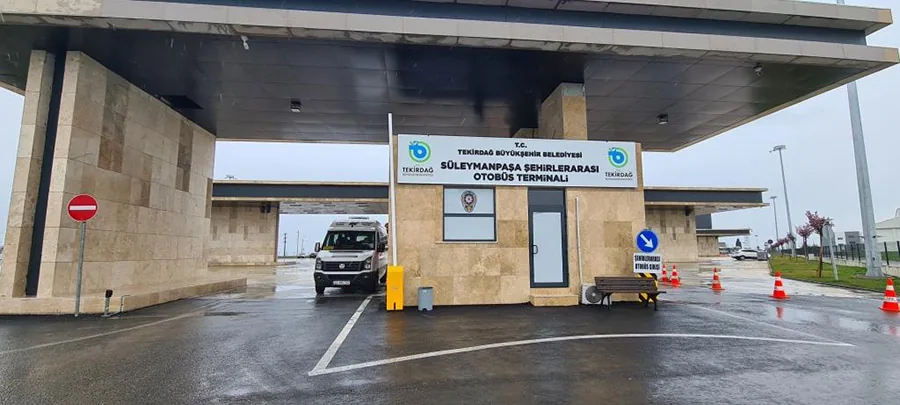 BUS TERMINAL
Tekirdağ Bus Terminal License Plate Recognition System
Tekirdağ · Bus Terminal / Transport
View case study →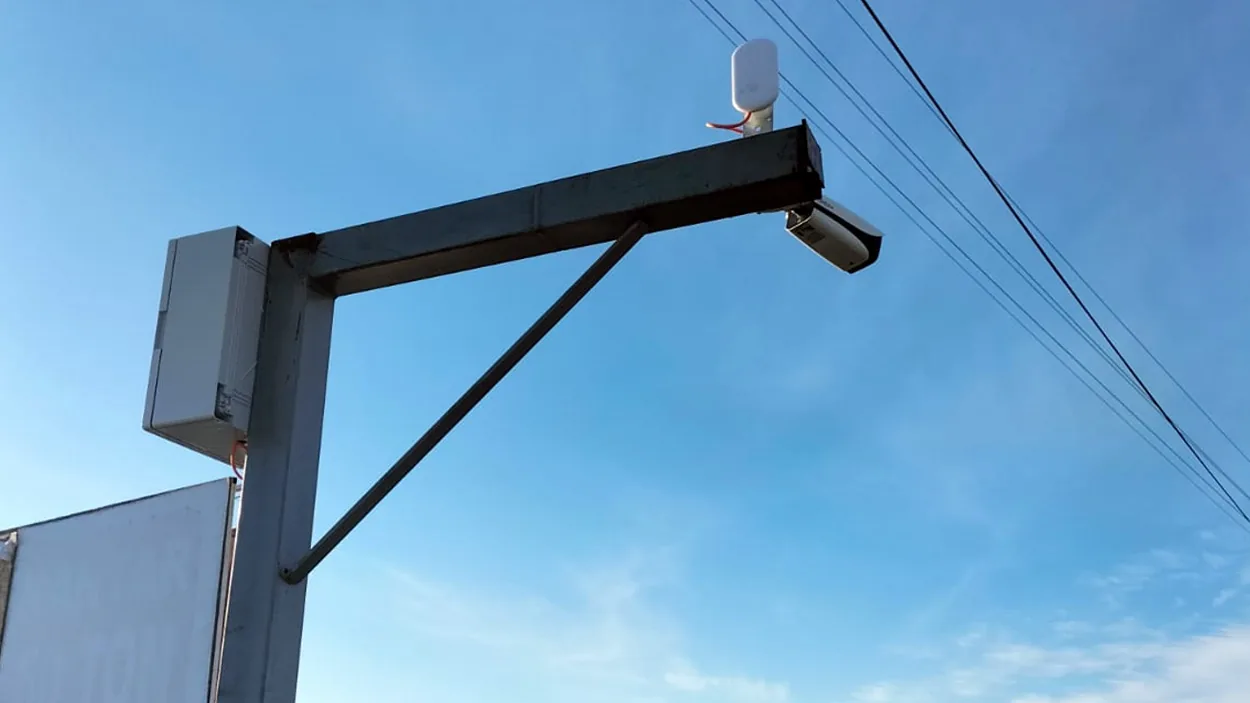 PUBLIC
Edirne Wireless License Plate Recognition System
Edirne · Public / Institutional
View case study → RESIDENTIAL
Dragos Royal Residence License Plate Recognition System
Istanbul · Residential
View case study →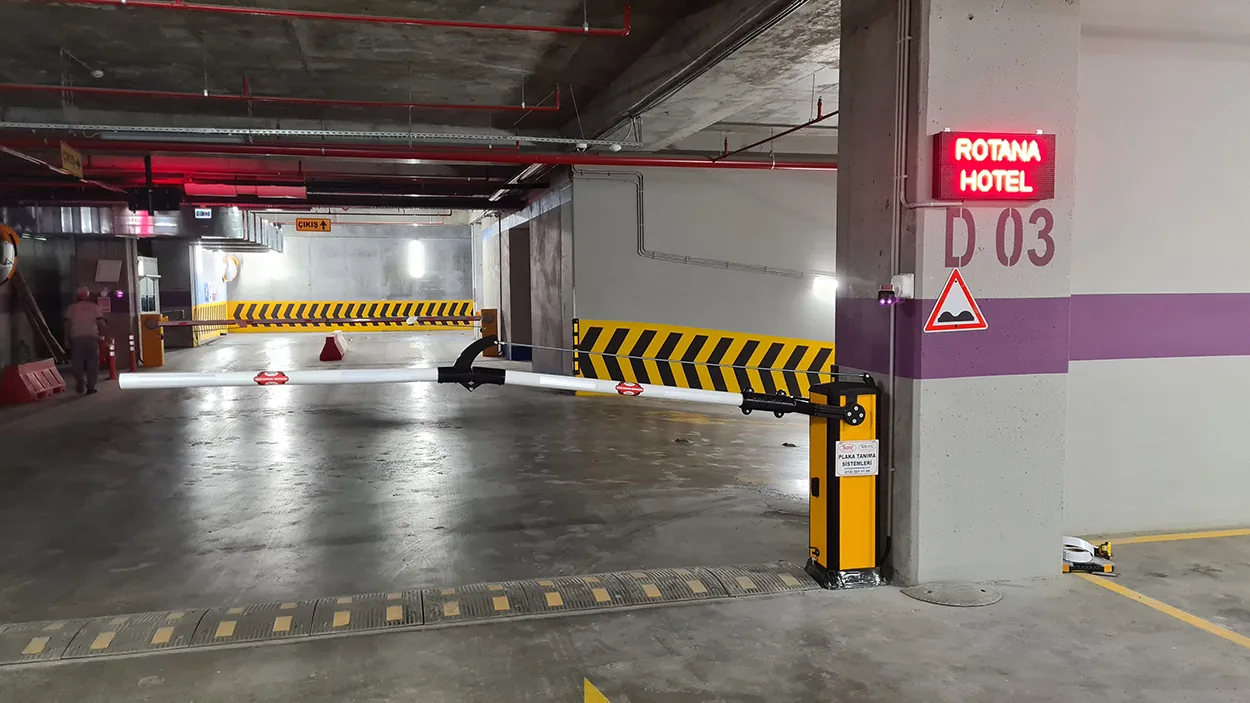 HOTEL
Rotana Hotel License Plate Recognition System
Istanbul · Hotel / Hospitality
View case study → PUBLIC
Tekirdağ Governorship License Plate Recognition System
Tekirdağ · Public
View case study → LOGISTICS
Yurtiçi Kargo Headquarters License Plate Recognition System
Istanbul · Logistics
View case study →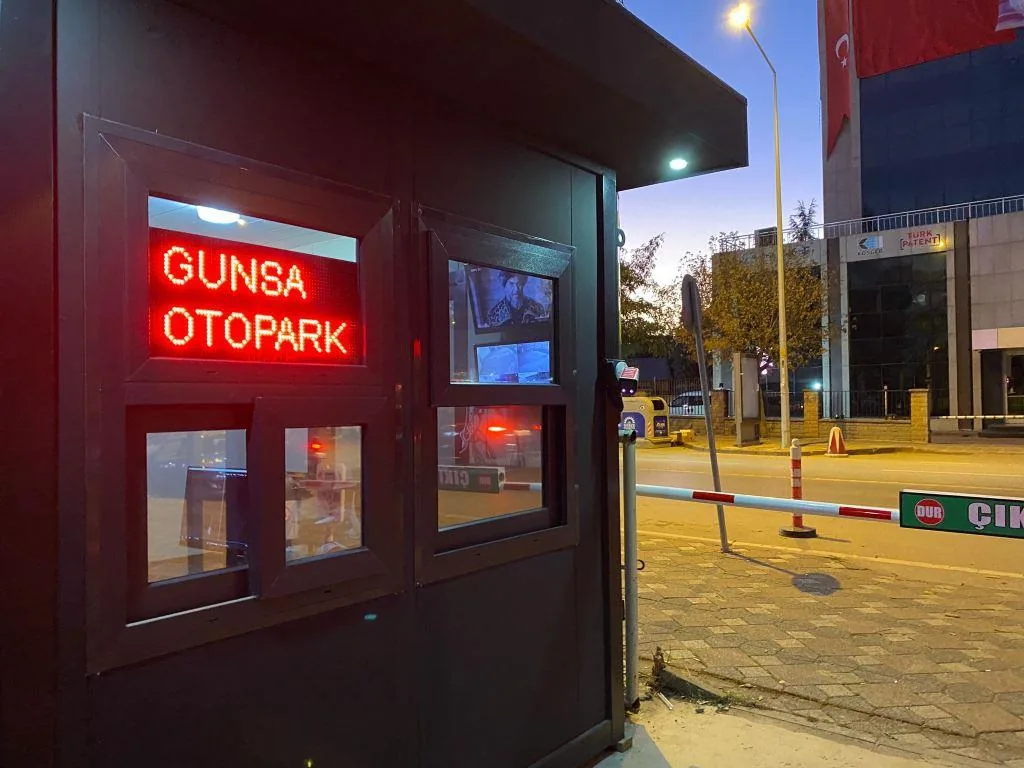 PARKING
Günsa Paid Parking License Plate Recognition System
Gebze / Kocaeli · Paid Parking
View case study → COMMERCIAL
OPET MEPET Lüleburgaz Wireless License Plate Recognition
Lüleburgaz / Kırklareli · Fuel Station / Commercial
View case study → RESIDENTIAL
Luxera Evleri License Plate Recognition System
Istanbul · Residential
View case study → MALL
Cassaba Mall License Plate Recognition System
Eskişehir · Mall / Parking
View case study → LOGISTICS
Edirne Truck Park License Plate Recognition System
Edirne · Logistics / Truck Park
View case study →What determines the cost of a license plate recognition system?
License plate recognition system prices are not a fixed list price; even the same “single gate” project differs in scope depending on the existing barrier, cable distance and software needs. The six main cost items are:
| Item | Impact | Depends on |
|---|---|---|
| Camera | High | Number of lanes, lens and IR range |
| Software (local / cloud) | Medium | Record, subscriber, fee and report needs; drops in software-free setups |
| Barrier / gate | Medium–High | Low if the existing barrier can be used, high if a new one is needed |
| Relay / IO / PLC | Low–Medium | Traffic light, LED display and emergency scenarios |
| Cabling or wireless bridge | Medium | Camera-to-centre distance and trenching |
| Installation, commissioning, training | Low–Medium | Poles, cabinet, software setup and user training |
What lowers cost: reusing the existing barrier and a suitable existing camera, a single shared entry/exit lane, a software-free setup where no records are needed, ready network and power. What raises it: many lanes, high speed, a new barrier or sliding gate, long cable runs and extra integrations such as kiosk, PLC or LED display.
Plan the annual operating items as well: periodic maintenance, a subscription for cloud use, and service in case of failure. Sample scenarios and an item-by-item explanation are on our license plate recognition system pricing page, ready sets on LPR system packages. The exact price is given after a free survey in a quote listing each item separately.
License plate recognition system installation step by step
The installation process we follow on site aims for correct reads from day one. Single-gate projects are usually completed in a few days; for example, the Cassaba Mall installation took 2 days and Dragos Royal residential site took 3 days.
- Free site survey: Entry/exit points, vehicle speed, lighting, the existing barrier and network are inspected on site.
- Project design: System type, camera and lens, mounting point, control layer and software scope are defined; a quote with separate items is prepared.
- Infrastructure and mounting: Poles, cabinet, PoE switch, a wireless bridge if needed and the barrier are installed.
- Camera tuning: Angle, focus, exposure and IR are set by testing with real vehicles by day and night.
- Software and list setup: Subscriber, unit, staff, guest and blacklist records, tariffs and user permissions are entered.
- Testing, training and handover: All scenarios (authorized, unauthorized, guest, power/internet outage) are tested and managers are trained.
Data protection (KVKK) in license plate recognition systems
Since plates and vehicle photos can be personal data, facilities using a license plate recognition system should prepare a privacy notice, use an information sign at the entrance, keep records limited to their purpose for a defined period and restrict panel access by permission. Sole software has user-based permissions and activity history. See KVKK in license plate recognition systems for details.
Frequently asked questions about license plate recognition systems
What is a license plate recognition system?
A license plate recognition system reads a vehicle's plate with a camera, converts it to text, compares it with an authorization list and automatically controls the barrier, gate or parking fee. It is also known as ANPR or LPR.
What types of license plate recognition systems are there?
There are five main types: software-based, software-free (on-camera), PLC-controlled, wireless and cloud (SaaS) systems. A paid parking system is the software-based system applied to fee collection.
Is a plate recognition system the same as a plate reading system?
Yes, in everyday use they mean the same thing. “Plate reading” usually refers to the camera converting the plate to text, while a “license plate recognition system” is the whole system that also decides, controls the barrier and records.
How does a license plate recognition system work?
The camera detects the vehicle, captures a sharp plate image, the recognition engine reads the characters, the plate is compared with the authorization list, the barrier opens if authorized and the passage is recorded with a photo.
Does a license plate recognition system work without internet?
Yes. In Sole systems the access decision is made on site; up to 110,000 whitelist entries can be held on the camera. If the internet drops, vehicles keep passing and records are uploaded when the connection returns.
What is the accuracy of a license plate recognition system?
The manufacturer figure for the camera we use is 98% and above for European plates. This applies under suitable site conditions such as camera angle, distance, lighting and plate condition.
Does license plate recognition work at night?
Yes. The camera reads plates at night with 850 nm infrared or dual-light illumination. Headlight glare and reflections are handled with correct exposure settings and mounting angle.
Can a license plate recognition system be added to my existing barrier?
In most cases, yes. We integrate with barriers, sliding gates and gate motors that can be triggered by relay or dry contact; compatibility is tested during the survey.
Can my existing security cameras be used for plate recognition?
In some cases, if angle, resolution and night illumination are suitable; but general-purpose security cameras are not optimized for plates on moving vehicles, so read success drops. This is assessed during the survey.
What do license plate recognition system prices depend on?
They depend on camera count and specifications, software scope, barrier needs, relay/PLC, cabling or wireless bridge, and installation and training. The exact price is given item by item after a free survey.
How long does installation take?
Single-gate projects are usually completed in a few days; for example, our Cassaba Mall installation took 2 days and Dragos Royal residential site took 3 days. For multi-gate projects needing infrastructure, the duration is set during the survey.
How many lanes can one LPR camera read?
In a standard installation one camera reads one lane. Special wide-view placements can read two lanes, but a separate camera per lane is recommended for accuracy.
How are guest vehicles managed?
In software-based and cloud systems a guest plate is defined for a set period or date range; authorization ends automatically when it expires. Guest permission can be granted per unit.
Plate recognition or RFID tag — which is better?
Plate recognition requires no extra credential and also handles guest vehicles; RFID tags may suit fixed, pre-tagged fleets. For most residential sites and car parks, plate recognition is more practical.
How is license plate recognition used in a paid car park?
The entry time is recorded by plate and the duration is calculated at exit; payment is taken by credit card and contactless at the booth, the Smart KIOSK, the Unmanned Exit Payment Terminal, via QR code or a handheld terminal. Kiosks do not accept cash.
Is a license plate recognition system KVKK compliant?
It can be operated in compliance with KVKK when a privacy notice, information sign, purpose-limited retention and authorized access are in place. Sole software has user-based permissions.
Which integrations does a license plate recognition system support?
Barrier, sliding gate, traffic light and LED display integration is standard. API integration for data exchange with ERP, accounting or institutional software is developed per project.
Last updated: 27 September 2026 · Technical content: Gray Teknoloji / Sole System project team
Get a free survey and quote →