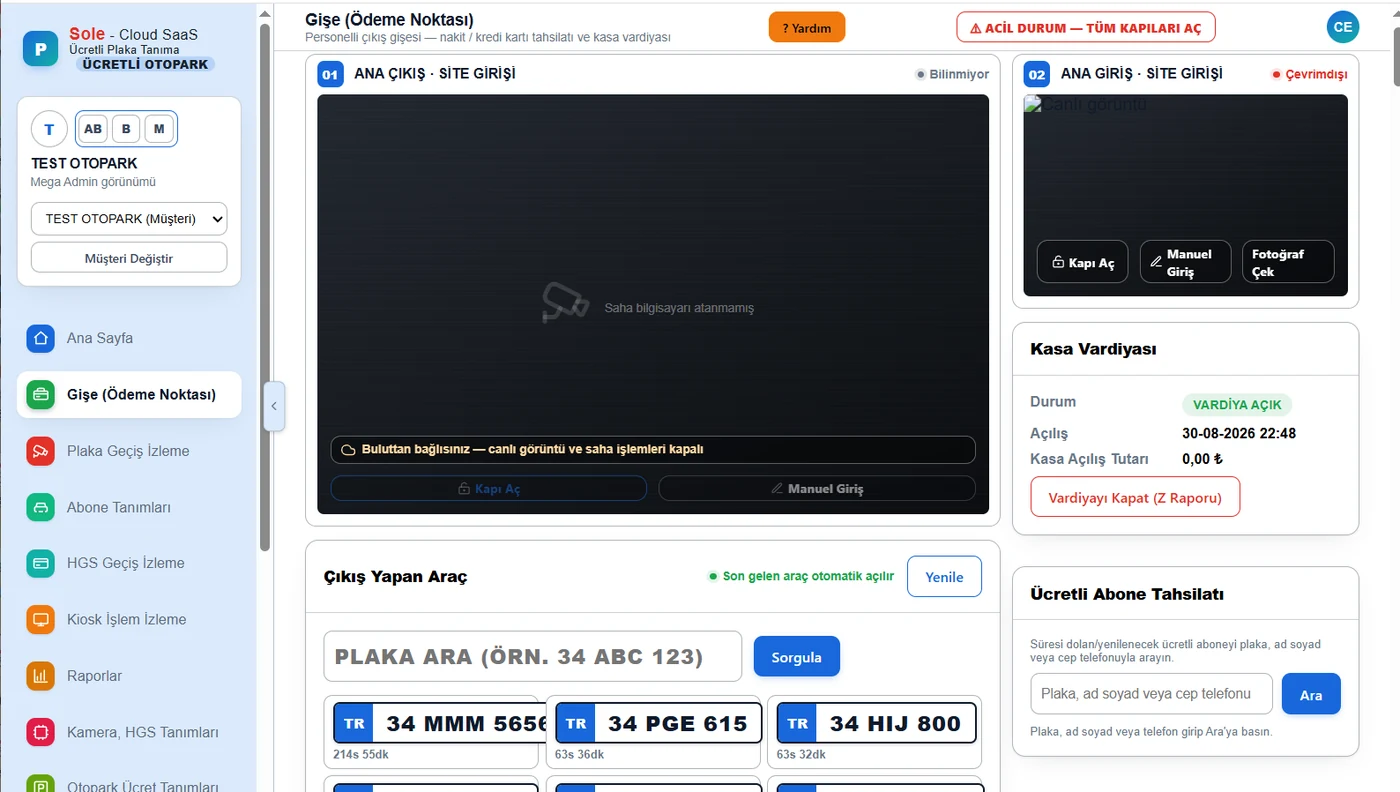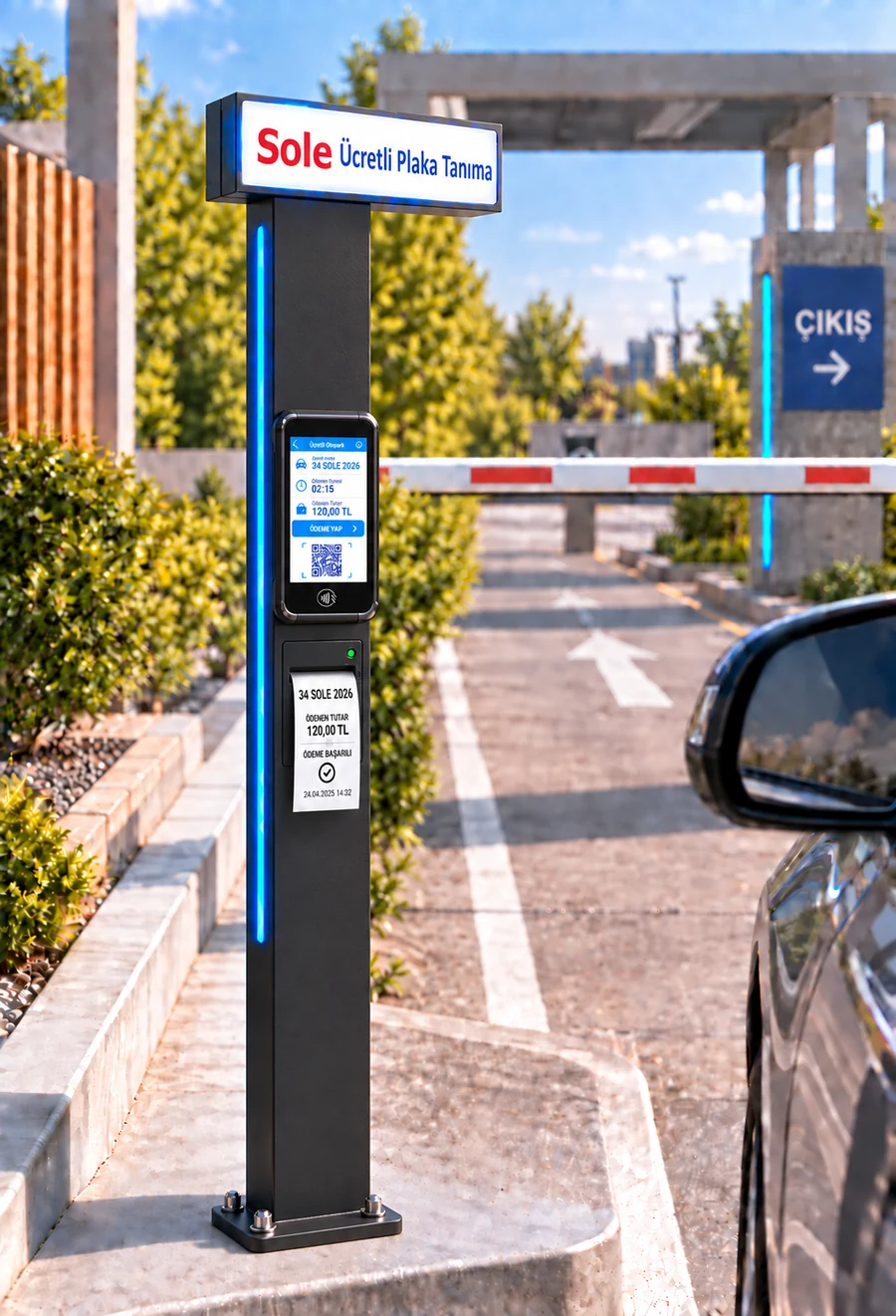
Direct answer: Pay-at-exit parking reads the plate on the exit lane, shows the amount due on a terminal next to the barrier, and lets the driver open the barrier by tapping a card without leaving the vehicle. No tickets, tokens or booth staff are needed.
Paying at the exit, step by step
- The vehicle approaches the exit lane and the camera reads the plate.
- The amount calculated from the parking duration appears on the terminal screen.
- The driver taps a contactless card without leaving the vehicle.
- Once approved, a receipt is printed if requested and the barrier opens.
- The transaction is stored with plate, duration, amount and payment channel.
Why pay at the exit?
Pay without leaving the car
No walk to a kiosk; the transaction happens on the exit lane.
Shorter queues
Payment and barrier opening happen in one step, cutting waiting time at the exit.
No staff needed
Collection happens at the exit without a cashier on site.
Ideal for single-exit car parks
Practical where there is no room for a pedestrian payment point.
Subscribers never wait
The payment step is skipped for subscriber and free vehicles.
Full audit trail
Every transaction is reported with plate, photo, duration, amount and channel.
Kiosk versus pay-at-exit
| Topic | Payment kiosk | Exit terminal |
|---|---|---|
| Location | Near the pedestrian exit | On the exit lane next to the barrier |
| Driver | Leaves the car and walks to the kiosk | Stays in the car |
| Peak hours | Paid before the exit, so the barrier queue stays short | Payment happens at the exit, so a queue can form there |
| Extra items | Debt, past fees and extra services are listed on screen | A fast, payment-focused flow |
| Best for | Large car parks: malls, hospitals, bus terminals | Single-exit, mid-sized car parks |
Subscribers and free vehicles
For subscribers and zero-amount passages the payment step never opens; the barrier lifts as soon as the plate is recognized. Monthly paid subscriptions are renewed at the booth or the kiosk, and those close to expiry appear in a report. In subscriber-heavy sites and business centres this keeps the exit lane clear.
Installation
| Mounting | Next to the exit barrier, at driver window height |
|---|---|
| Connection | Network cable or wireless bridge; barrier relay wiring |
| Camera | LPR camera on the exit lane |
| Payment | Contactless credit/debit card |
| Software | Paid parking LPR software |
Security and records
Every exit transaction is stored with the plate, entry and exit photos, duration, amount, payment channel and approval details. A vehicle trying to leave without paying does not get the barrier; a debt can be recorded and collected on its next visit. Manual barrier openings from the panel are reported separately with their reason.
Frequently asked questions
How does pay-at-exit parking work?
When the vehicle reaches the exit lane the camera reads the plate, and the amount calculated from the parking duration appears on the terminal screen. The driver taps their card and the barrier opens once payment is approved.
Does the driver have to get out of the car?
No. The exit terminal is mounted at driver window height, so the transaction is completed without leaving the vehicle.
Kiosk or pay-at-exit — which suits me?
An exit terminal suits car parks with a single exit and moderate visitor traffic; a kiosk suits large car parks with queues at peak hours and a separate pedestrian exit. They can also be used together.
What if the plate cannot be read?
If the vehicle does not appear on screen, an attendant can record the plate manually from the panel and take the payment. At the kiosk the driver can type the plate on the on-screen keyboard.
Do subscriber vehicles wait at the exit?
No. For subscriber and free vehicles the payment step is skipped and the barrier opens as soon as the plate is recognized.
Can cash be taken at the exit?
The exit terminal works with cards. Cash is collected at the booth or on the attendant's handheld terminal.
Last updated: September 21, 2026 · Features: Sole LPR and parking software
Request a free survey and demo →