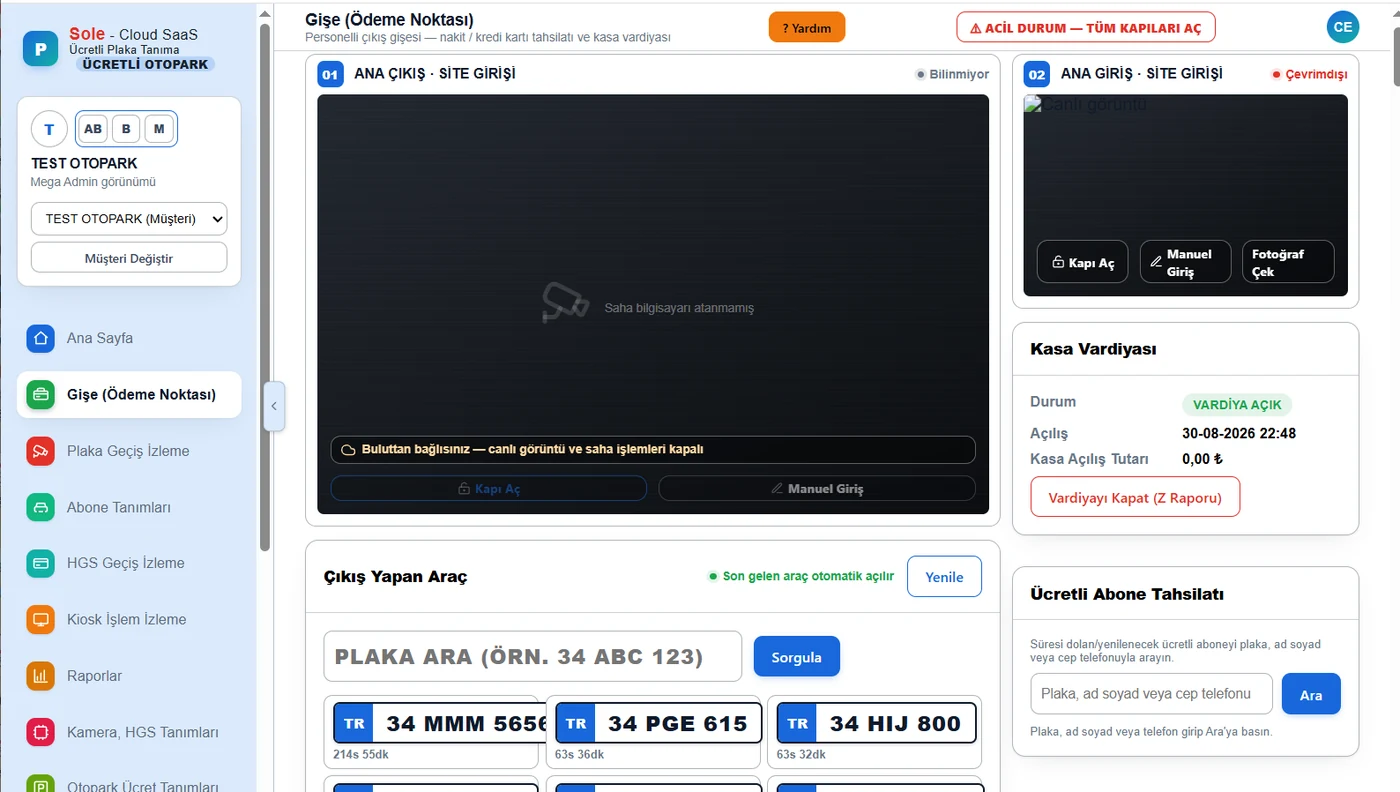
Direct answer: A parking automation system records entries and exits automatically with plate recognition, calculates the parking duration and fee in software, collects payment at a kiosk, exit terminal or booth, and opens the barrier automatically — end to end, with no tickets, cards or tokens to hand out.
System components
LPR camera
Reads the plate at entry and exit; vehicle type, colour and make are recognized and foreign plates supported.
Barrier and access hardware
Boom barriers, sliding gates or bollards are connected through a relay.
Booth cabinet
Site PC, network switch, electrical protection and relay board in a single cabinet.
Payment point
Kiosk, exit terminal or staffed booth — one or several together, depending on the facility.
Cloud software
Tariffs, subscribers, occupancy, collections and reports are managed in a browser panel.
Occupancy display
A display showing free spaces at the entrance, added per project.
How the automation works, step by step
- The vehicle is recognized at entry, its photo stored and the duration counter started.
- For subscriber or free vehicles the barrier opens directly.
- For visitors the parking time runs; if capacity is full, entry is closed.
- Before the exit, the fee is looked up by plate and payment is taken.
- An exit grant is created after payment; at the exit the plate is read and the barrier opens.
- All passages and collections flow into the reports.
Occupancy and capacity management
Once capacity is defined, occupancy is tracked live. When the car park is full the entry barrier stays closed while the exit is always open; subscribers can be exempted and spaces reserved, and a number of last spaces can be closed to visitors. The home screen shows vehicles inside now, free spaces and an hour-by-hour entry chart.
Subscribers, visitors and special cases
- Subscriber vehicles are defined as free or monthly paid, with or without an end date.
- For visitors, a free period, first hour, following hours and a daily cap are set separately.
- Different tariffs apply per vehicle class, selected automatically from the type recognized by the camera.
- Discounts, free passages, refunds and cancellations are logged with their reason.
- Extra services such as car washing are added to the vehicle and appear on the payment screen.
Reporting and control
Revenue, vehicle class breakdown, occupancy, average parking time, debt, refund and discount reports come ready; output can be printed or exported to PDF and Excel. Which screens each user sees is set individually, and important actions including barrier openings are logged with who and when.
Installation and operation
Installation covers the site survey, camera and barrier mounting, cabinet and network infrastructure, software definitions and staff training. In operation, periodic barrier maintenance, camera cleaning and receipt paper checks are enough. See our pricing guide for the cost items.
Daily use as a parking management system
In daily operation the manager sees everything on one screen: vehicles inside now, free spaces, today's revenue with its channel breakdown, open debts, subscriptions about to expire and camera connection status. Entry-exit control, occupancy tracking and subscriber management sit in the same panel, so no separate program is needed.
Where it is used
Shopping mall and hospital car parks (heavy visitor traffic, multi-lane entries), hotels (subscriber and guest separation), business centres and residential sites (mostly subscribers), factories and logistics facilities (truck classes), bus terminals and city car parks. Tariff structure and the number of payment points differ at every facility; for site and factory entrances see our residential site and factory solutions.
Frequently asked questions
What does a parking automation system consist of?
LPR cameras at the entry and exit, a boom barrier, a booth cabinet holding the site PC and relay wiring, a payment point (kiosk, exit terminal or booth) and cloud-based parking software.
Why use plates instead of tickets and cards?
Ticket printing, card distribution and lost ticket handling disappear. Because the vehicle is identified by its plate, entry and exit are faster and subscriber vehicles pass without stopping.
How is occupancy managed?
Capacity is defined; when the car park is full the entry barrier stays closed while the exit is always open. Subscribers can be exempted and spaces reserved, and occupancy is visible live on the home screen.
Does it work with my existing barriers?
In most cases yes. The barrier is connected through a relay; sliding gates and bollards are integrated the same way.
How many lanes can it handle?
From single-lane car parks to multi-entrance mall and hospital car parks. The number of lanes, cameras and payment points is decided during the site survey.
Do I need a separate server for the software?
No. The management panel is cloud software opened in a browser; on site only the PC that talks to the cameras and the barrier runs.
Last updated: September 21, 2026 · Features: Sole LPR and parking software
Request a free survey and demo →